
Most American retirees researching Spain start with the same handful of cities. Madrid. Barcelona. Valencia. Málaga. Sevilla. These are the places the relocation blogs cover, the places with established expat infrastructure, the places Americans have heard of. They are also the places where rents have climbed 40 to 70 percent over the past decade and where the anti-tourism and anti-foreign-buyer political pressure is most intense.
There is another Spain that American retirees rarely hear about. Smaller provincial capitals across the interior and the north where a central one-bedroom apartment rents for around €600, where the historic centers are completely walkable, and where the community texture that Americans imagine when they picture European retirement actually still exists. These cities are not secrets to Spaniards. They are secrets to the American retirement market, which has concentrated its attention on a handful of famous destinations while overlooking the places where the math and the daily life both work better.
This piece walks through what these smaller Spanish cities actually offer, which specific cities deserve American attention, what the trade-offs honestly are, and what American retirees considering them should understand. The information is current as of early 2026, and the prices cited are real average rents from the Spanish property market.
What These Smaller Cities Actually Offer

The smaller Spanish provincial capitals share a set of characteristics that make them well-suited to American retirement in ways the famous cities are not.
The rents are dramatically lower. A central one-bedroom apartment in these cities rents for approximately €600 per month as of early 2026. The same apartment in central Madrid runs €1,400 to €1,800. In Barcelona, €1,500 to €1,900. The differential is not marginal. It is the difference between retirement that works on moderate assets and retirement that requires substantial wealth.
The historic centers are genuinely walkable. These cities developed before the automobile and retained their walkable cores. The retiree can reach the market, the pharmacy, the doctor, the cafe, the cathedral, and the train station on foot. Car ownership is optional rather than necessary. The walkability produces both cost savings and the daily physical activity that supports healthy aging.
The community is real. These cities have not been hollowed out by tourism or foreign-buyer displacement. The neighbors are Spaniards living their lives. The shopkeepers know their regular customers. The cafe has its regulars. The community fabric that the famous cities have partially lost to international demand remains intact in the smaller cities.
The pace is unhurried. The Spanish rhythm of long lunches, afternoon rest, evening sociability operates fully in these cities. The frantic pace of Madrid and Barcelona does not exist here. The retiree seeking the slow Spanish life finds it more completely in the smaller cities than in the famous ones.
The healthcare is accessible. Spanish public healthcare operates throughout the country. The smaller cities have hospitals, specialists, and primary care. The medical infrastructure is competent even if the very rare specialized procedures require travel to larger centers. For routine and most non-routine care, the smaller cities are well-served.
The cultural depth is substantial. These are old cities with cathedrals, Roman ruins, medieval quarters, festivals, museums, and centuries of history. The cultural richness is not diminished by the smaller size. Many of these cities have UNESCO World Heritage designations and cultural offerings that exceed what their population size would suggest.
The combined offering is a version of Spanish retirement that delivers most of what Americans want from Spain at a fraction of the cost of the famous cities, with community texture the famous cities have partially lost.
The Specific Cities Worth American Attention
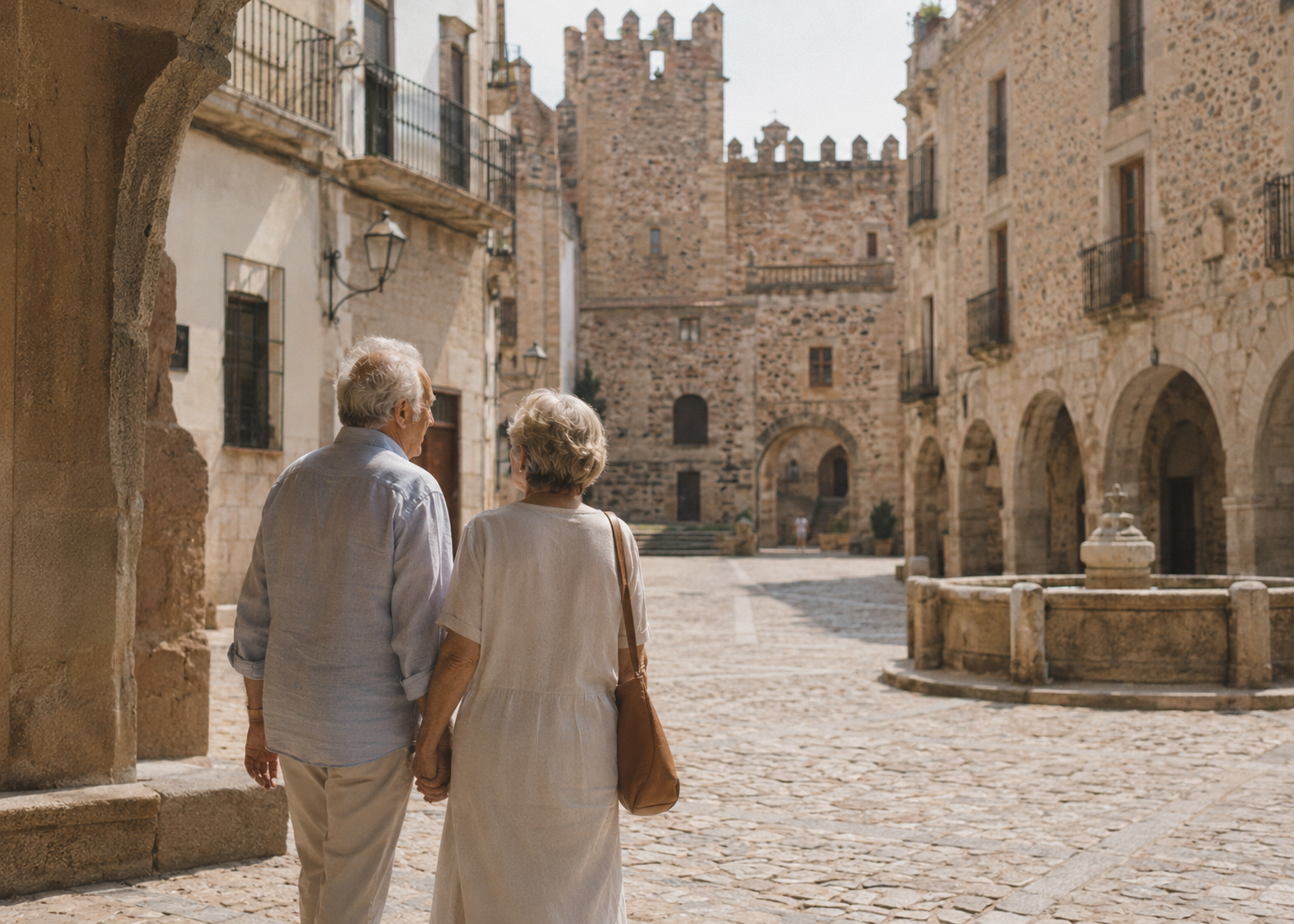
Several smaller Spanish cities deserve specific consideration from American retirees. Each has its own character, climate, and trade-offs.
Zamora, in Castilla y León. Currently the cheapest provincial capital in Spain, with average rents around €616 monthly. A compact, deeply traditional city on the Duero River with a remarkable concentration of Romanesque churches. The historic center is small and entirely walkable. Winters are cold and dry, summers hot. The pace is unhurried. Best suited to retirees who want a very Spanish small-city atmosphere with minimal foreign presence and the lowest costs in the country. The trade-off is that Zamora is genuinely small and quiet, which some retirees will find peaceful and others will find limiting.

Lugo, in Galicia. Average rents around €624 monthly, though prices rose nearly 19 percent in early 2025, indicating that the window is closing faster here than elsewhere. The city is encircled by intact UNESCO-listed Roman walls that you can walk along their full circuit. The old town within the walls is lively with tapas bars and student energy. Galicia is green and Atlantic, with cooler, wetter weather than southern Spain. Best suited to retirees who prefer a temperate climate, excellent food, and strong regional identity. The trade-off is the weather, which resembles Ireland or the Pacific Northwest more than the sunny Spain of the popular imagination.
Cáceres, in Extremadura. Average rents around €648 monthly. The medieval old town is a UNESCO World Heritage site, visually stunning, one of the best-preserved historic quarters in Europe. Outside the historic core, it is a quiet residential city surrounded by open countryside. Mild winters, intense summers. Best suited to retirees who value historic surroundings and a peaceful small-scale lifestyle. The trade-off is a limited local economy and considerable summer heat.
Jaén, in Andalusia. Average rents around €672 monthly. The world’s olive oil capital, surrounded by olive groves, delivering Andalusian sun and tapas without Costa del Sol pricing. A working Spanish city with a university presence and strong food culture. Best suited to retirees who want authentic Andalusia with far fewer expats than Sevilla or Málaga. The grocery costs are the lowest in the country. The trade-off is hot summers and a very Spanish rhythm that requires real cultural adaptation.
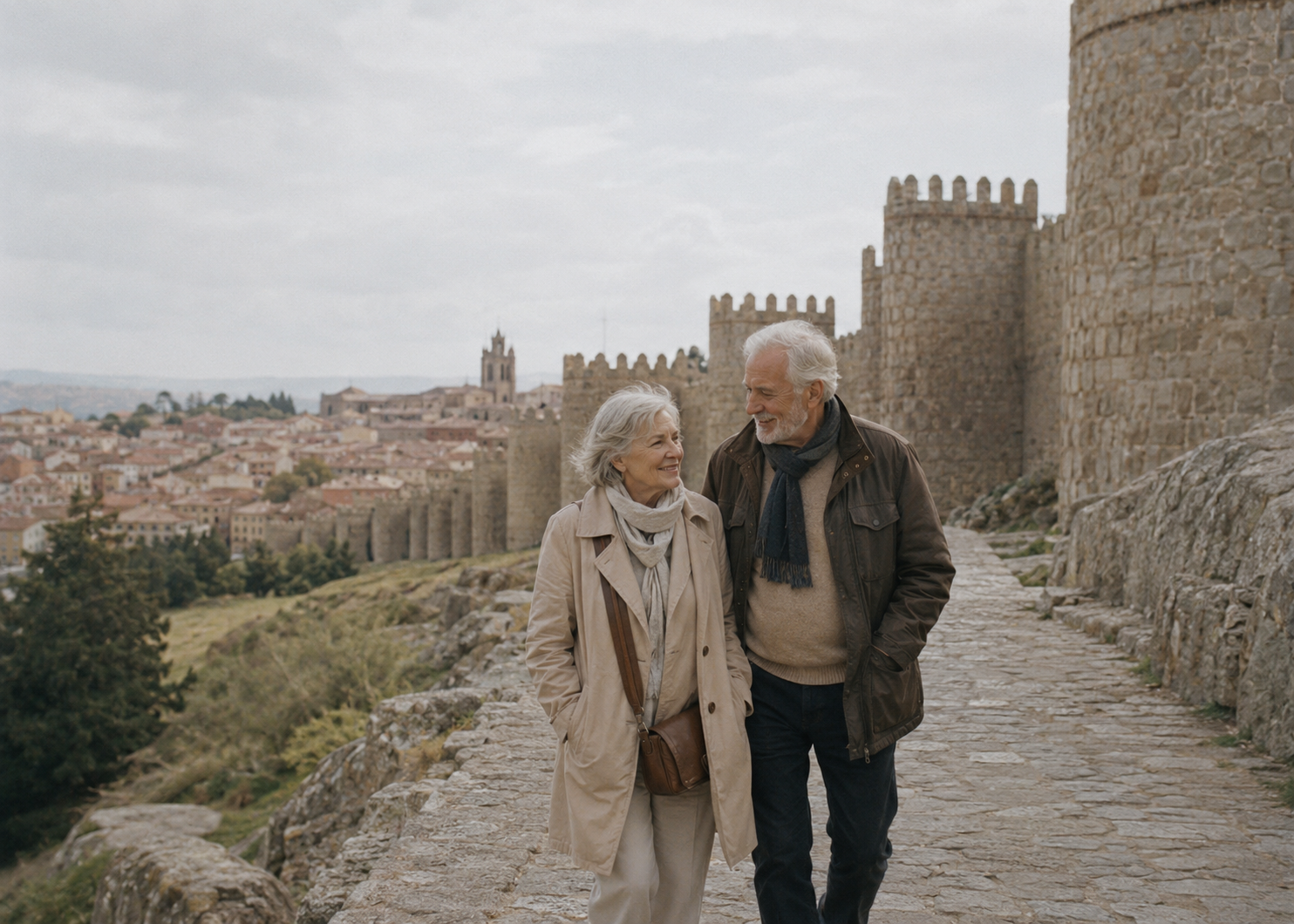
Ávila, in Castilla y León. Average rents around €672 monthly. Defined by its iconic 11th-century medieval walls, perched at high altitude. The high elevation produces cooler summers than most of Spain, which appeals to retirees who find Spanish heat difficult. Madrid is accessible by train in just over an hour, providing big-city access without big-city costs. Best suited to retirees who appreciate rich history, cooler summers, and proximity to Madrid. The trade-off is genuinely cold winters due to the altitude.
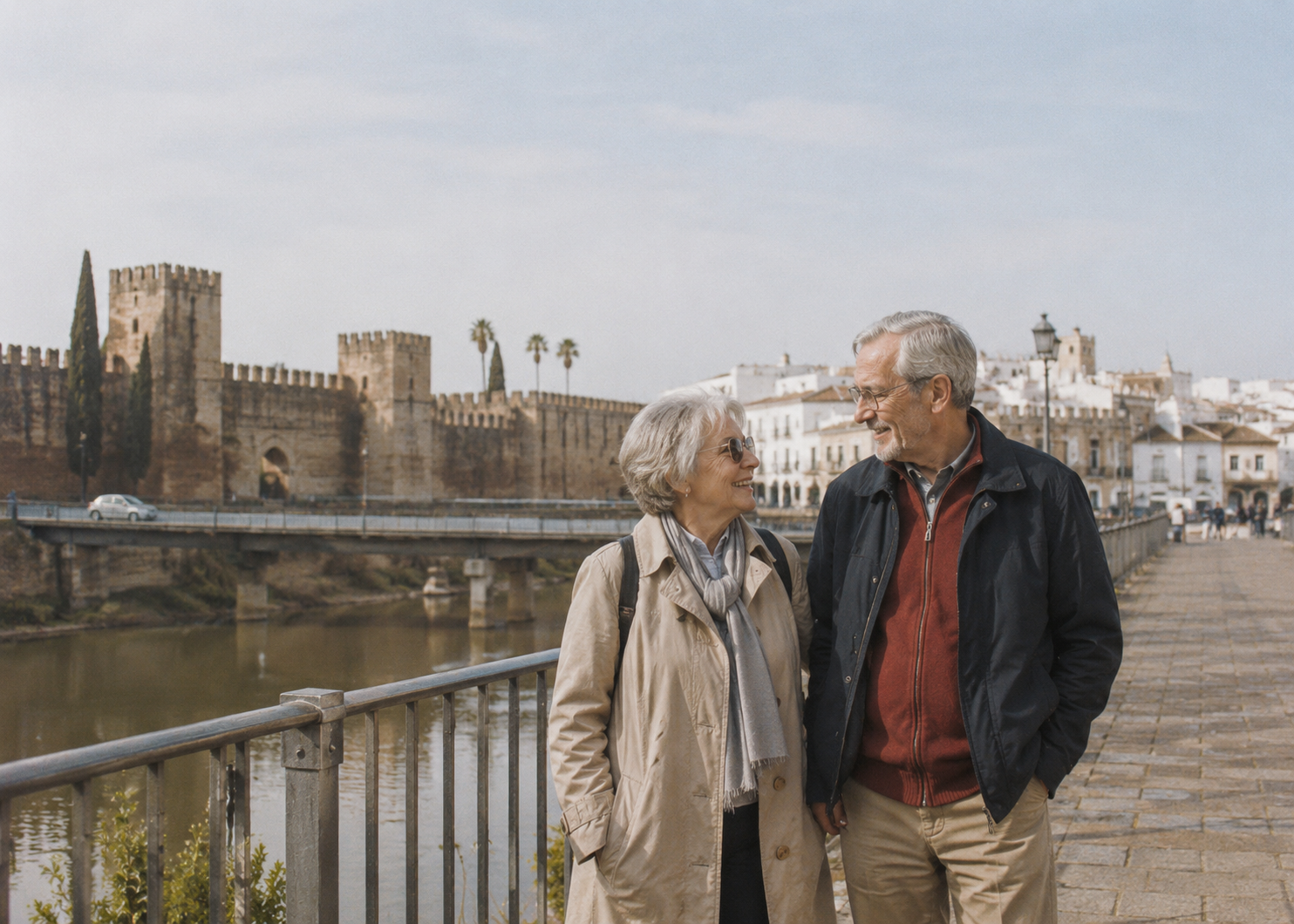
Badajoz, in Extremadura. Average rents around €648 monthly. On the Portuguese border, just over two hours from Lisbon. One of the largest Moorish fortresses in Europe anchors the city’s history. Mild winters, intense summers, modern apartments in low-rise buildings. Best suited to retirees who want proximity to both Spanish and Portuguese culture and the option of easy travel into Portugal. The trade-off is that Badajoz is more functional than charming compared to some of the others.
Each of these cities delivers the core offering: central apartments around €600, walkable historic centers, real community, competent healthcare, and cultural depth. The choice among them depends on climate preference, the specific cultural texture desired, and the trade-offs each retiree is willing to accept.
What The Trade-Offs Honestly Are
The smaller Spanish cities are not a free lunch. The lower costs and the intact community come with real trade-offs that American retirees should understand before committing.
English is less commonly spoken. The famous cities have extensive English-speaking infrastructure because they receive substantial international tourism and have large expat populations. The smaller cities operate primarily in Spanish. The retiree who does not learn functional Spanish will struggle with daily life in ways that would be less acute in Madrid or Málaga. This is arguably a benefit (it forces the integration that produces successful retirement) but it is a real demand on the retiree.
The expat community is thinner. Americans who want a substantial English-speaking social network find it more easily in the famous cities. The smaller cities have few other Americans. The retiree seeking American or international community will find less of it. The retiree seeking Spanish community will find more.
The international connectivity is reduced. The famous cities have major airports with direct flights to the US and across Europe. The smaller cities require connections through Madrid or other hubs for international travel. The retiree who travels frequently to the US faces longer, more complex journeys.
The specialized services are limited. Very specialized medical procedures, specific consumer goods, particular professional services may require travel to larger cities. The routine needs are well-served locally. The unusual needs sometimes require travel.
The cultural offerings, while substantial, are smaller in scale. The major museums, the international performances, the extensive cultural calendars of Madrid and Barcelona exceed what the smaller cities offer. The smaller cities have real culture but less of it in absolute volume.
The economy is limited. These cities do not have dynamic job markets or business opportunities. For retirees, this is irrelevant since they are not seeking employment. For retirees who imagined some part-time work or business involvement, the opportunities are scarce.
The winters in some can be cold. Ávila, Zamora, and other interior cities have genuinely cold winters. The sunny warm Spain of the imagination is more the southern coastal Spain than the interior. Retirees specifically seeking warmth should weight the southern options (Jaén) over the interior options.
These trade-offs are real. For many American retirees, they are acceptable or even desirable. The retiree seeking authentic Spanish integration, lower costs, and intact community accepts the reduced English infrastructure and thinner expat community as the price of the deeper Spanish experience. The retiree seeking a comfortable expat-adjacent retirement with extensive English support and large international community may prefer the famous cities despite the higher costs.
Why These Cities Remain Secrets To Americans
The smaller Spanish cities remain off the American retirement radar for specific reasons that are worth understanding.
The relocation industry markets the famous cities. The blogs, the relocation consultants, the YouTube channels, the books. They cover Madrid, Barcelona, Valencia, Málaga, Sevilla. The marketing concentrates attention on the places that already have American interest, which reinforces the concentration. The smaller cities receive little marketing attention because they have little existing American interest, which keeps the American interest low.
Americans gravitate toward recognized names. A retiree explaining to friends and family that they are moving to Valencia is understood. A retiree explaining that they are moving to Zamora faces blank expressions. The recognition factor drives American attention toward the famous cities even when the smaller cities offer better value and daily life.
The English-language information is thin. Researching Zamora or Lugo or Jaén in English produces far less information than researching Madrid or Barcelona. The information gap makes the smaller cities harder to evaluate from the US, which discourages American consideration.
The expat infrastructure is self-reinforcing. Americans move where other Americans are. The famous cities have American communities, which attracts more Americans, which builds the community further. The smaller cities lack the seed community that would attract additional Americans.
The famous cities have international airports. The convenience of direct flights drives American attention. The smaller cities require connections, which discourages Americans who prioritize travel convenience.
The combined effect is that American retirement attention concentrates on a handful of famous cities while the smaller cities, which often offer better value and daily life, remain overlooked. The concentration is a market phenomenon rather than a reflection of where retirement actually works best.
What This Means For American Retirees Considering Spain
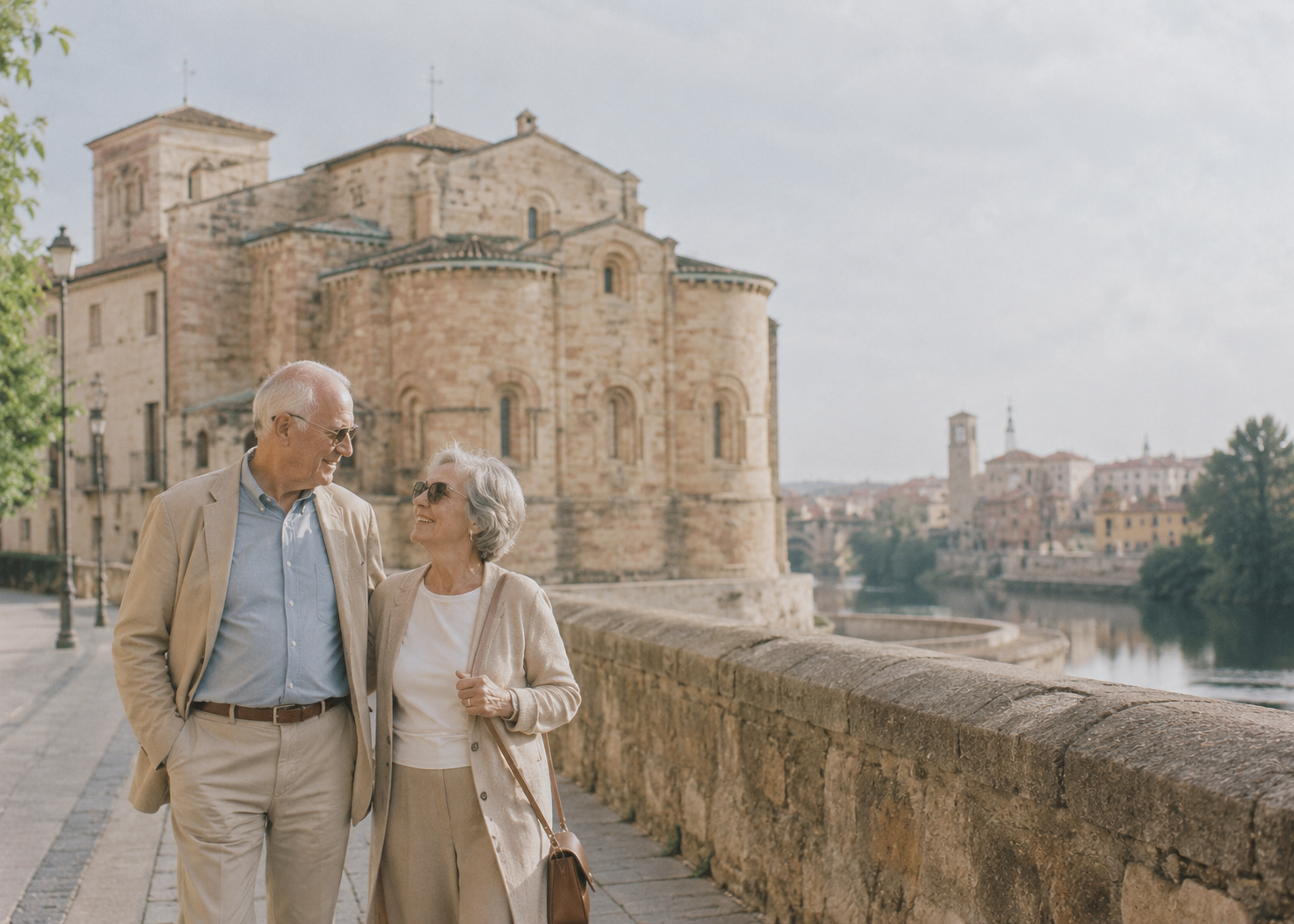
For American retirees evaluating Spanish retirement, the smaller cities deserve serious consideration alongside the famous ones.
Run the math on the smaller cities. A retirement that requires $400,000 in assets to work in Valencia might work on $250,000 in Zamora or Jaén. The cost differential can be the difference between a retirement that requires substantial wealth and a retirement that works on moderate assets.
Visit the smaller cities before deciding. Spend a week in Zamora, a week in Lugo, a week in Jaén. The daily life reveals itself in ways that research cannot capture. Some retirees will find the smaller cities perfect. Some will find them too quiet. The visit reveals which.
Be honest about your Spanish language commitment. The smaller cities require functional Spanish more than the famous cities do. The retiree willing to learn Spanish has access to the smaller cities. The retiree unwilling to learn Spanish should weight the famous cities more heavily.
Be honest about your community needs. The retiree who needs substantial English-speaking community should weight the famous cities. The retiree who wants Spanish community or who is comfortable with a thinner social network finds the smaller cities rewarding.
Consider the climate carefully. The interior cities have cold winters. The southern cities have hot summers. Match the climate to your preference rather than assuming all of Spain is warm and sunny.
Recognize that the window may be closing. Lugo rents rose nearly 19 percent in early 2025. As the famous cities become more expensive and more restrictive, displaced demand is beginning to flow toward the smaller cities. The current low prices may not persist indefinitely. The smaller cities that are secrets today may be discovered tomorrow.
For American retirees willing to look beyond the famous handful of Spanish cities, the smaller provincial capitals offer a version of Spanish retirement that delivers most of what Americans want from Spain at substantially lower cost, with community texture that the famous cities have partially lost. The secret is available to retirees willing to investigate it. The investigation requires looking past the marketing toward the places where the math and the daily life both work better than the famous destinations suggest.
The Spanish retiree living comfortably in Zamora or Lugo or Jaén is not making a sacrifice relative to the retiree in Madrid or Barcelona. In many ways the smaller-city retiree has the better deal: lower costs, more walkability, deeper community, more authentic Spanish life. The famous cities offer recognition, English infrastructure, and international connectivity. The smaller cities offer everything else, often better, at a fraction of the cost. The choice between them is individual, but the smaller cities deserve to be in the conversation that currently overlooks them.

About the Author: Ruben, co-founder of Gamintraveler.com since 2014, is a seasoned traveler from Spain who has explored over 100 countries since 2009. Known for his extensive travel adventures across South America, Europe, the US, Australia, New Zealand, Asia, and Africa, Ruben combines his passion for adventurous yet sustainable living with his love for cycling, highlighted by his remarkable 5-month bicycle journey from Spain to Norway. He currently resides in Spain, where he continues sharing his travel experiences with his partner, Rachel, and their son, Han.